Understanding Architectural Styles for Custom Homes in Callaway, FL

Jeff Puckett Construction, Inc. • April 13, 2026

Understanding Architectural Styles for Custom Homes in Callaway, FL

Architectural style construction in Callaway, FL encompasses traditional, modern farmhouse, coastal, rustic, and contemporary designs, each tailored to client preferences and the surrounding neighborhood aesthetic.

How Do Traditional Architectural Styles Create Timeless Appeal?

Traditional styles feature symmetrical facades, pitched roofs, columns, and classic proportions that have remained popular across generations due to their balanced, familiar appearance.

Traditional architecture draws from Colonial, Georgian, and Neoclassical influences, emphasizing formal layouts and proportionate window placement. Front porches with columns create welcoming entries, while shutters and decorative trim add character. Interior spaces typically include defined rooms rather than open concepts, appealing to buyers who prefer separation between living areas.

These homes blend naturally into established neighborhoods where historical character is valued. Traditional designs also maintain strong resale value because they appeal to broad buyer demographics. In Callaway's mix of older and newer developments, traditional styles fit comfortably without appearing dated or trendy.

What Defines Modern Farmhouse Design in Today's Custom Homes?

Modern farmhouse design combines rustic elements like board-and-batten siding and metal roofs with contemporary open floor plans, large windows, and clean lines.

This style gained popularity by blending the warmth of rural farmhouses with the functionality of modern living. Exterior features include wide front porches, mixed materials like wood and stone, and simple gable rooflines. Interiors showcase exposed beams, shiplap walls, and neutral color palettes that create casual elegance.

Modern farmhouse kitchens feature large islands, open shelving, and farmhouse sinks that emphasize practicality and gathering space. The style accommodates families who want character without excessive ornamentation. Its versatility allows customization while maintaining recognizable design language that appeals to current buyer preferences.

Which Features Characterize Coastal Architecture?

Coastal architecture incorporates elevated foundations, covered porches, large windows, light colors, and durable materials designed to withstand salt air and hurricane conditions.

Elevated structures protect against storm surge and flooding while allowing breezes to flow underneath, naturally cooling the home. Expansive windows and glass doors maximize natural light and water views where available. Exterior materials include fiber cement siding, metal roofs, and corrosion-resistant hardware that resist coastal weather.

Covered porches and outdoor living spaces extend usable square footage while providing shade and protection from sun and rain. Interior finishes often feature light wood tones, white or soft blue color schemes, and tile or luxury vinyl flooring that withstand sandy feet and moisture. Coastal designs prioritize casual comfort and seamless indoor-outdoor transitions suited to Florida living.

Can Rustic Styles Work in Suburban Callaway Neighborhoods?

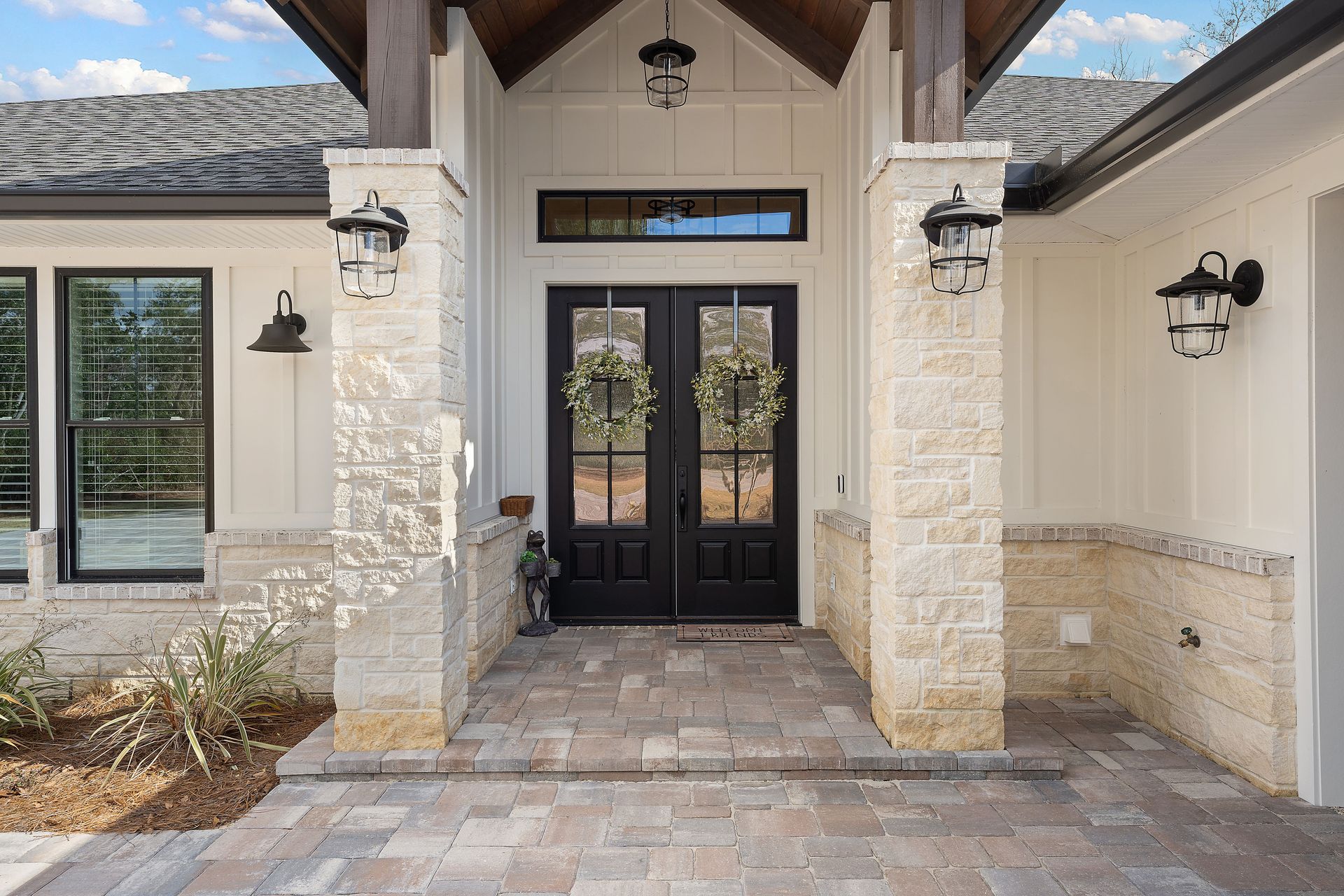
Rustic styles featuring natural wood, stone accents, and organic textures can adapt to suburban settings when balanced with refined finishes and proper scale.

Rustic architecture emphasizes natural materials and handcrafted details that create warmth and connection to nature. Log siding, stacked stone, and heavy timber beams define this aesthetic. However, full rustic designs may appear too rural for suburban contexts without thoughtful adaptation.

Suburban rustic homes often incorporate these elements selectively, pairing stone accent walls with painted siding or using timber details on covered entries rather than throughout. This approach maintains the style's character while fitting neighborhood contexts. Interior spaces blend rustic beams and stone fireplaces with updated kitchens and bathrooms, creating comfortable, livable environments. When properly scaled, rustic touches add personality without overwhelming your property's setting.

How Does Callaway's Mix of Residential Neighborhoods Influence Architectural Choices?

Callaway's diverse neighborhoods range from established mid-century communities to newer planned developments, creating varied architectural contexts that influence style selection and design compatibility.

Older Callaway neighborhoods feature ranch homes, split-levels, and traditional designs from the 1960s through 1980s. Building a new custom home in these areas requires sensitivity to established scale and setbacks to maintain neighborhood cohesion. Contemporary or modern farmhouse styles can work when sized appropriately and incorporating traditional elements like pitched roofs.

Newer developments often have architectural guidelines or covenants specifying acceptable styles, materials, and colors. Understanding these restrictions before designing prevents conflicts with homeowner associations. Working with builders experienced in Callaway's various neighborhoods ensures your architectural choices complement rather than clash with surrounding properties. Connecting with architectural style construction services in Callaway helps navigate these local considerations effectively.

Selecting an architectural style that reflects your personal taste while respecting neighborhood context creates a home you will enjoy for years. Each design approach offers unique benefits suited to different lifestyles and aesthetic preferences.

Explore architectural options that match your vision and property setting through custom home construction services in Callaway with Jeff Puckett Construction, 850-774-4843.

By Jeff Puckett Construction, Inc. April 13, 2026
Construction project management in Southport, FL ensures quality materials, building code compliance, regular inspections, and clear communication throughout your construction timeline.
By Jeff Puckett Construction, Inc. April 13, 2026
Remodeling services in Mexico Beach, FL update and improve existing homes with modern design and functionality to enhance comfort, efficiency, and property value.
By Regina Puckett February 24, 2026
How to know your decisions are right for you. If you’ve ever talked to friends who built a home, you’ve probably heard at least one horror story. -Budgets that drifted. -Decisions made in a rush. -Phone calls that weren’t returned. -Details that didn’t turn out the way they expected. -It’s enough to make anyone feel overwhelmed before the process even begins. And yet, building your home in Panama City should be one of the most rewarding experiences of your life. Especially if you’re building your primary residence in the $400,000 to $750,000 range. This isn’t a speculative investment. This is where you’ll live. Entertain. Relax. Possibly retire. So what separates a stressful experience from a confident one? It isn’t luck. It’s the process. Overwhelm Usually Starts With Uncertainty Most homeowners don’t feel overwhelmed because they can’t choose a cabinet color. They feel overwhelmed because they don’t know what’s coming next. They wonder: Are we spending too much? Are these allowances realistic? Is this change going to cost more than we think? Did we miss something important? When pricing is vague and decisions are reactive, stress becomes the default setting. Small uncertainties stack up until the entire experience feels unstable. But when the process is clear from day one, something shifts. Confidence replaces anxiety. What Clarity Feels Like at the Beginning The right building process starts with structure. Before construction ever begins, you should understand: • What your home is likely to cost based on real specifications • Where your budget is allocated • Which decisions must be made early • What can wait • How changes are handled Instead of guessing whether your selections will exceed allowances, you know what the allowances actually mean. Instead of reacting to upgrades mid-build, you’re making informed decisions before the foundation is poured. That early clarity matters. Especially for homeowners who value realistic budgets and want to avoid unnecessary spending. When you understand the numbers and the roadmap, you stop bracing for surprises. You start planning with intention. What Confidence Feels Like During Selections Selections are where many builds go sideways. This is often where budgets quietly expand. A slightly upgraded countertop here. A lighting package adjustment there. A flooring change that “isn’t that much more.” Individually, these decisions feel small. Together, they can create tension. In a well-managed process, selections are not rushed or emotional. They are guided. You should feel like: • You understand the cost impact of each decision • You know where investing more makes sense • You know where staying disciplined protects you • You are not being upsold, but advised Confidence during selections comes from transparency. When allowances are realistic and pricing conversations are direct, you can choose materials that fit your priorities without feeling manipulated. That is when building starts to feel enjoyable instead of stressful. What Steady Communication Feels Like Silence creates doubt. If weeks pass without updates, your mind fills in the gaps. Is something wrong? Is the schedule slipping? Did anyone notice that framing issue? A healthy building process includes consistent communication. You know: • Who your point of contact is • When to expect updates • How issues are handled • What stage comes next Even when challenges arise, steady communication keeps them from becoming emotional setbacks. In Florida’s climate, delays can happen. Materials can shift. Inspections can take time. But when the process is organized and leadership is personally involved, problems are addressed methodically instead of chaotically. That steadiness is what protects your peace of mind. What Attention to Detail Feels Like Details are easy to overlook until you’re living in the home. Trim alignment. Door swings. Outlet placement. Exterior finishes that withstand humidity and storms. Drainage planning. Storage that actually works for how you live. When a builder approaches your home as if they were going to move into it themselves, those details are not afterthoughts. You see it in: • Thoughtful layout adjustments that improve flow • Recommendations for low-maintenance materials • Layout tweaks that make entertaining easier • Design decisions that support aging in place A detail-oriented process does more than improve appearance. It protects long-term comfort and durability. And over time, those small decisions are what make a house feel easy to live in. What It Feels Like at the End The right building process doesn’t end with relief. It ends with confidence. You walk through your finished home and think: This makes sense. This fits our life. We stayed where we needed to financially. Nothing feels accidental. That feeling doesn’t happen by accident. It comes from: • Transparent pricing • Structured pre-construction planning • Disciplined selections • Consistent communication • Attention to detail from start to finish For homeowners building their primary residence in Panama City, the goal is rarely flash. It is stability. It is simplicity. It is long-term comfort. When the process is built around those values, the experience reflects them. Building Should Simplify Your Life — Not Complicate It If you’re considering building, you may already feel the weight of the decisions ahead. That feeling is normal. But overwhelm is not inevitable. With the right process, you move from uncertainty to clarity. From reactive decisions to intentional ones. From anxiety to steady confidence. You deserve to understand your budget. You deserve straightforward answers. You deserve a builder who respects both your investment and your peace of mind.  The difference truly is in the details — not just in the finished product, but in how the process is handled every step of the way. If you’re ready to explore what building could look like with a clear, structured approach, schedule a consultation. We’ll walk through your plans, your lot, and your goals so you can move forward with confidence instead of guesswork.
By Regina Puckett February 11, 2026
Questions You Should Ask Every Builder Before Signing a Contract Choosing a builder is not like choosing a paint color. It is not a cosmetic decision. It is a decision that will affect your finances, your stress level, and your daily life for decades. If you are building in the $400,000 to $750,000 range here in Panama City, you are not looking for the cheapest option. You are looking for clarity. You are looking for quality. And you are looking for a process that does not spiral out of control halfway through construction. Most homeowners who experience regret do not regret building. They regret not asking better questions before they signed. Here are the questions you should ask every builder before committing to a contract. 1. How Detailed Is Your Pricing — Really? Many proposals look thorough at first glance. A total number. A few line items. A clean presentation. But here is the problem. A vague estimate leaves room for surprises later. You should ask: • How specific are your allowances? • What exactly is included in this price? • What is not included? If allowances are unrealistically low, you will discover that during selections. If major categories are unclear, you will discover that during construction. Transparent pricing protects you from change orders that feel unexpected. It allows you to make decisions early, when they are still affordable. A builder who is confident in their process will not hesitate to walk through the numbers in detail. If the pricing conversation feels rushed or defensive, pay attention. Clarity up front simplifies the entire build. 2. How Do You Help Clients Stay on Budget? Every builder will say they “work within your budget.” That is easy to say. The better question is how? Do they: • Review your plan and identify cost drivers early? • Offer realistic material expectations? • Explain where to invest and where to save? • Adjust specifications before construction begins? Budget overruns usually do not happen because of one dramatic mistake. They happen through a series of small, unchecked decisions. A disciplined pre-construction process protects you. It keeps emotion from overruling practicality once the build is underway. If simplifying your life is one of your goals, staying in control of the budget is a major part of that. 3. What Does “Custom” Mean to You? In this market, the word custom can mean many things. For some builders, it means you can choose finishes from a fixed menu. For others, it means structural flexibility, layout adjustments, and detailed personalization. Neither approach is wrong. But you need to understand which one you are signing up for. Ask: • Can we modify the floor plan? • How flexible are design changes? • When do decisions need to be finalized? The more clearly expectations are defined, the smoother your build will be. Misalignment here is one of the biggest causes of frustration mid-project. When you understand the level of customization available, you can make decisions with confidence instead of assumption. 4. Who Will Be Overseeing My Build? Experience matters. But involvement matters just as much. Will you be working with: • The owner? • A project manager? • A rotating supervisor? • A sales representative after signing? Ask who your primary point of contact will be. Ask how often you will receive updates. Ask how issues are handled when they arise. A home is a collection of thousands of small decisions. The difference is often in how carefully those details are managed day after day. When leadership is personally involved and accountable, quality tends to follow. When oversight is thin, details get missed. And in construction, missed details are rarely inexpensive. 5. How Do You Handle Change Orders? Changes are part of building. Even well-planned projects occasionally evolve. The question is not whether changes happen. The question is how they are handled. Ask: • How are changes documented? • When are they priced? • Do you approve them in writing before work proceeds? An organized change order process protects both you and the builder. It keeps decisions intentional rather than reactive. Without structure, small changes can quietly snowball. With structure, you stay in control. 6. What Materials and Methods Do You Use for Long-Term Durability? Especially in Florida, materials matter. Humidity, storms, heat, and salt air all take a toll over time. Ask: • What exterior materials do you recommend and why? • How do you address moisture control? • What maintenance should we expect long term? If your goal is a home that simplifies your life, durability is not optional. Low-maintenance materials, thoughtful detailing, and climate-appropriate construction methods make daily living easier. Shortcuts rarely show up in the first year. They show up later. You want to build in a way that protects you long after move-in day. 7. Can You Walk Me Through Your Process From Start to Finish? This question may be the most important one. A clear process reduces anxiety. It prevents confusion. It keeps expectations aligned. You should understand: • Pre-construction steps • Design and selections timeline • Permitting expectations • Construction milestones • Communication frequency • Final walkthrough procedures When a builder can confidently explain the entire journey, it signals preparation and experience. When the answer feels vague, that uncertainty often continues during construction. Building a home should feel structured and steady, not unpredictable. 8. Can I Speak to Recent Clients? Past performance is one of the strongest indicators of future experience. Ask to speak with homeowners who recently completed builds in a similar price range. Listen for patterns: • Did they feel informed? • Did pricing feel transparent? • Did the builder respect the budget? • Was the process organized? No builder is perfect. But consistency in positive feedback is a powerful signal. ________________________________________ Why These Questions Matter Signing a contract is not just a financial commitment. It is a partnership. The right builder will welcome informed clients. They will appreciate thoughtful questions. They will see them as a sign that you are serious and prepared. The wrong builder will see questions as resistance. If your goal is to build a well-designed, efficient home in Panama City that simplifies your life rather than complicates it, these conversations are essential. A clear budget. Defined expectations. An organized process. Attention to detail. Those are not luxuries. They are protections. The difference is often in the details long before the first board is nailed in place. If you are considering building and want clarity before signing anything, we would be glad to walk through your plans, lot, and budget expectations with you. Schedule a consultation, and let’s make sure the questions are answered before the contract is signed.